

Sennheiser MKE 200 directional on-camera mic rental in Bangalore
A working pro's guide to renting Sennheiser's compact directional mic — the one with the smoother voice character, integrated wind protection, and a dual-cable kit that switches between camera and smartphone in seconds.
If you've spent any time recording dialogue or voice-led content, you know that microphones don't just capture audio — they impose a character on it. Two mics pointed at the same speaker, in the same room, at the same distance, will produce two recognisably different recordings. The frequency response curve, the way the capsule handles transients, the plosive behaviour, the off-axis colouration — all of it adds up to what audio engineers call "voicing." For voice-driven content where the human spoken word is the subject, that voicing matters more than almost any other technical specification.
The Sennheiser MKE 200 is a compact directional on-camera mic that brings the company's broadcast audio heritage to a budget-friendly form factor. It's roughly the same size and weight class as a RODE VideoMic GO, but with two practical advantages most renters discover after their first shoot: it sounds noticeably warmer on spoken word, and it ships with cables for both cameras and smartphones in the box — so you stop carrying adapters around. For Bangalore-based YouTubers, podcasters, vloggers, and run-and-gun documentary shooters who need a mic that handles both their camera rig and their phone, this is the rental to consider.
The case for renting a Sennheiser over a Rode
Both companies make excellent on-camera mics, and both work well in the kind of work most Bangalore creators do. The decision usually comes down to three things: the audio character you want, the durability you need, and whether you shoot on a phone as well as a camera.
Sennheiser's MKE 200 has a slightly tamer presence peak in the upper midrange compared to RODE's brighter, more "produced" sound. In practice, that means voices recorded through the MKE 200 sound a little more natural and less aggressive — which works in your favour for podcast-style content, sit-down interviews, narration, and any work where the speaker has a sibilant voice that brighter mics tend to exaggerate. RODE mics tend to sound more upfront and presence-forward, which is excellent for outdoor talking-head YouTube content but can feel harsh on close-mic'd voiceover. Neither is objectively better. They're different colour palettes — and the MKE 200 is the more conservative, broadcast-leaning choice.
The all-metal housing is the second practical advantage. The MKE 200 takes the kind of bag knocks that bend plastic-bodied competitors. For travel content, run-and-gun BTS work, or any shoot where the mic spends time in a backpack alongside other gear, the durability difference matters over a multi-day rental.
What's included in the rental kit
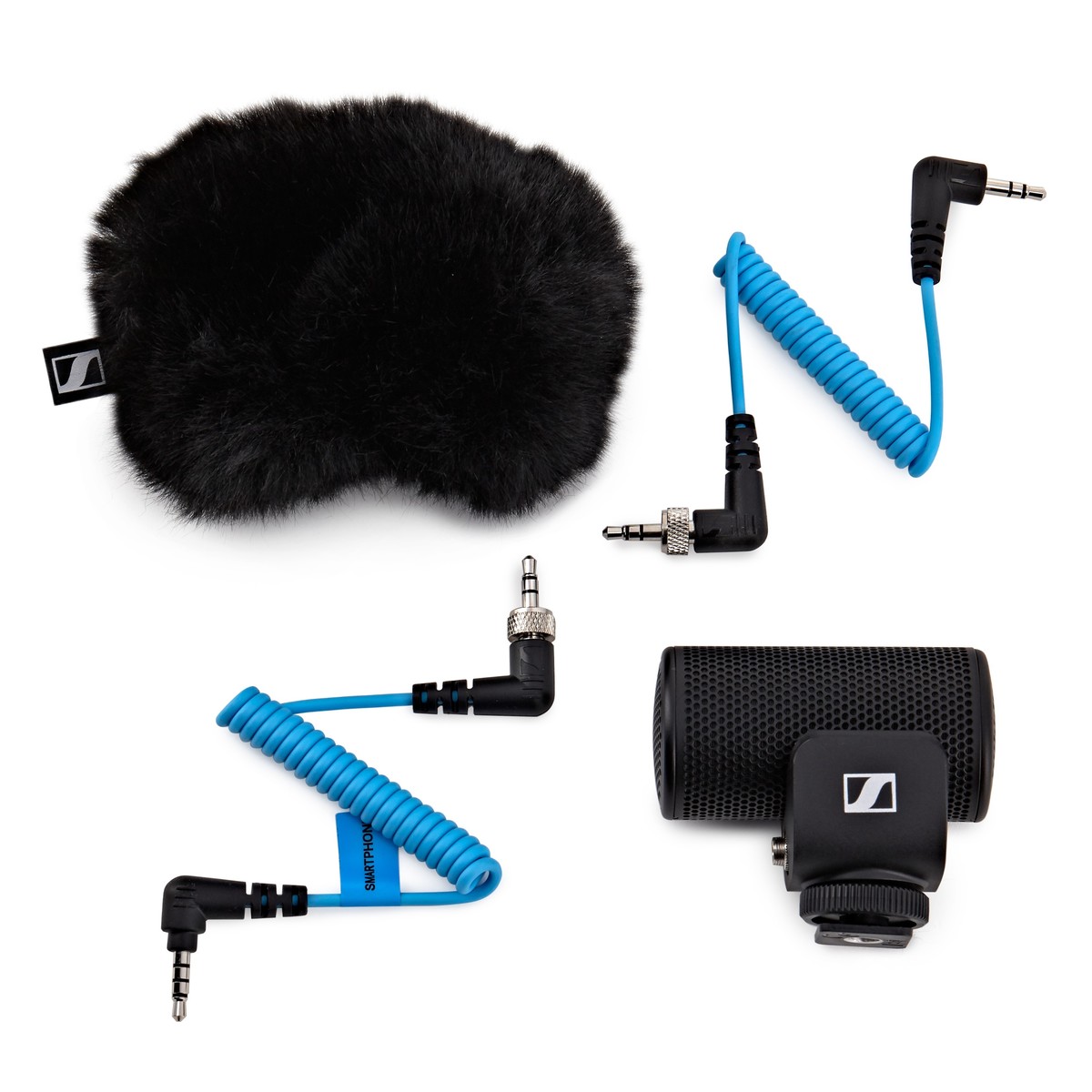
Our Bangalore rental ships with the Sennheiser MKE 200 microphone, the cold-shoe mount, the 3.5mm TRS coiled cable for camera connection, the 3.5mm TRRS coiled cable for smartphone connection, the included furry windshield for outdoor shoots, and the protective pouch. We test every unit for capsule integrity, cable continuity, and confirm both cables work with their target devices before dispatch.
The dual-cable inclusion is genuinely useful — most competing mics ship with only one cable type, forcing you to track down adapters or rent additional accessories for hybrid shoots. With the MKE 200, you swap the cable in 10 seconds and your mic is now on a phone instead of a camera. This becomes important the first time a client asks for a quick smartphone-shot vertical reel midway through a day of camera work.
Built-in wind and handling protection — and what it really does
Sennheiser builds the shock mount and an internal foam wind layer directly into the MKE 200's housing. There's no external Lyre suspension visible on the mic body — it's all integrated. The advantage is a smaller, cleaner profile that doesn't snag on bags or door frames during run-and-gun work. The trade-off: you cannot replace or upgrade the suspension if it wears, and the integrated design has slightly less mechanical isolation than a fully-floating shock mount.
In practical terms: handling noise is well-controlled for normal operation. If you're walking with the camera, refocusing the lens, or repositioning the rig, you won't hear it on the recording. If you're running with the camera, banging the rig against your hip, or shooting handheld in a moving vehicle — you'll hear some bumps. For comparable performance to a tripod-mounted shotgun, you don't need to do anything special. For aggressive handheld work, treat it like any other on-camera mic and minimise sudden rig impacts.
The internal foam handles light air movement — ceiling fans, indoor breezes, nearby AC vents. For any outdoor shoot, fit the included furry windshield. Bangalore's pre-monsoon afternoon breezes will rumble the bare capsule even on what feels like a still day. The deadcat is not optional outdoors.
Powering it through your camera
The MKE 200 needs no batteries. It draws plug-in power from the camera's 3.5mm microphone input — typically 2 to 5V supplied automatically by any modern mirrorless or DSLR. Sony A7 IV, A7S III, FX3, FX30, ZV-E10, ZV-E1, Canon R5, R6 Mark II, R7, R8, R50, Panasonic GH6, S5 II, Lumix S1H, Nikon Z6 II, Z7 II, Z8, Z9 — all confirmed compatible.
Older bodies that don't supply plug-in power, or cinema cameras like Blackmagic Pocket models, won't drive the mic through their mic input. For Blackmagic users, route the audio through an external recorder like the Zoom H5N or feed it into a powered preamp first. Mention your camera body when booking and we'll confirm compatibility before dispatch.
Smartphone shooting — what the TRRS cable unlocks
The included 3.5mm TRRS cable connects the MKE 200 directly to any smartphone with a 3.5mm jack, or to USB-C / Lightning ports via the standard adapter Apple, Samsung, and Google ship with their phones. Once connected, the mic shows up as the audio source in the native camera app, Filmic Pro, Blackmagic Camera, or any third-party recording app.
This matters more than it sounds. A growing chunk of paid client work in Bangalore now involves vertical reels, Instagram content, and "second screen" smartphone capture alongside the main camera. With the MKE 200, you don't need a separate mic for the phone — same capsule, same character, same cable swap. Quality stays consistent between your camera footage and your phone footage, which means less work matching audio in post.
Where the MKE 200 isn't the right rental
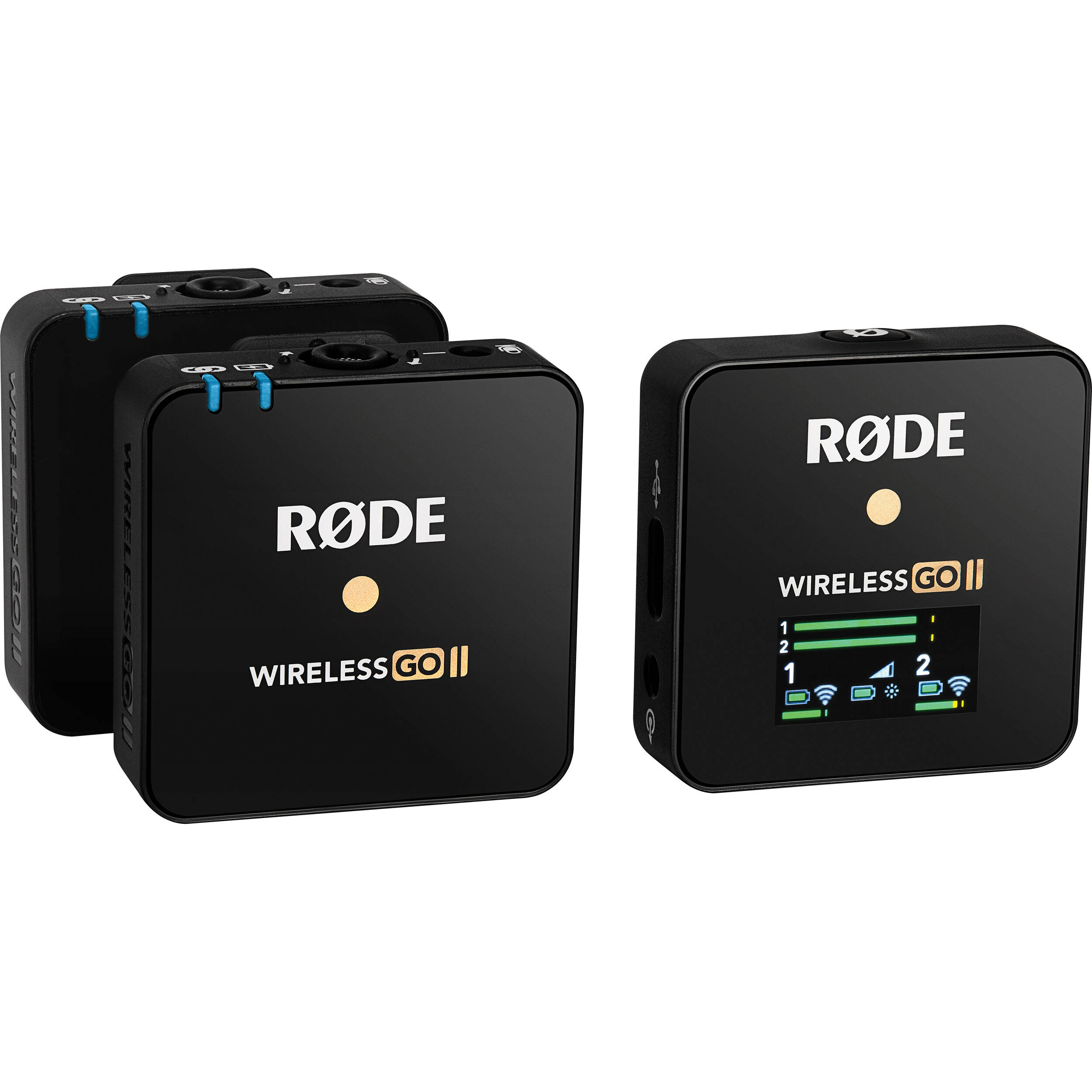
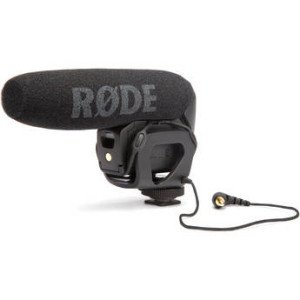
The proximity rule applies here exactly as it does for any on-camera directional mic: you need the subject within 1 to 1.5 metres of the capsule for clean broadcast-quality audio. The MKE 200's directionality is supercardioid, which narrows what gets captured but does not extend the mic's reach. For any shoot where the subject is more than two metres from the camera — wedding speeches, panel discussions at distance, large room interviews — rent a wireless lav system instead. The RODE Wireless GO II is the right call for those scenarios.
For multi-person interviews, panel shoots, or any work where you want individual mics on each speaker, lavalier setups beat any single on-camera mic. For broadcast-grade work in noisy outdoor environments — trade shows at Bangalore International Exhibition Centre, busy street shoots, conferences — a battery-powered shotgun like the RODE NTG2 has tighter directionality and more rejection of off-axis sound.
For controlled studio recording where audio quality is paramount, a side-address condenser mic feeding through an audio interface or a Zoom H5N will outperform any on-camera shotgun. The MKE 200 is built for run-and-gun mobility. It is not built to replace a dedicated studio mic on a podcast shoot where audio is the primary product.
Pre-shoot checklist
Bangalore rental and pickup
The Sennheiser MKE 200 is available at our Bangalore counter for same-day, weekend, and multi-day rentals. We deliver across the city for paid setups and offer self-service pickup-return at our location. Pair it with a body from our camera inventory, lights from our LED rental list, or browse the broader Video & Audio category for monitoring, recording, and wireless options. Apply code COOL25OFF at checkout for 25% off until 31st July 2026.
Frequently asked questions
Does the Sennheiser MKE 200 need batteries?
No. It runs on plug-in power from the camera's or phone's 3.5mm input. Plug it in and it works. Every modern Sony, Canon, Nikon, and Panasonic mirrorless body provides this automatically.
Is it better than the Rode VideoMic GO?
Different rather than better. The Sennheiser sounds slightly warmer and less presence-forward, which suits voice-led content like podcasts and interviews. The Rode is brighter and more produced, which works for talking-head YouTube. The MKE 200 also includes both camera and phone cables in the box — Rode requires you to buy the phone adapter separately.
Can I use it directly with my iPhone or Android phone?
Yes. Use the included TRRS cable. For phones without a 3.5mm jack (most current iPhones, Pixels, Galaxy bodies), connect through the USB-C-to-3.5mm or Lightning-to-3.5mm adapter Apple/Samsung/Google ship with the device. The mic shows up natively in the camera app, Filmic Pro, and Blackmagic Camera.
How close does the subject need to be?
Within 1 to 1.5 metres of the capsule for broadcast-quality recording. Up to 2 metres in acoustically treated rooms. Beyond that, room reverb starts colouring the audio — at which point you should switch to a wireless lavalier system on the talent.
Is it good for podcast recording?
For video podcasts where mics are out of frame and the speaker stays close to camera, yes — Sennheiser's smoother voicing genuinely flatters spoken word. For audio-only podcasts where you can mic each speaker individually with side-address condensers, those will outperform any on-camera shotgun. Match the mic to the production format.
Will the included windshield handle Bangalore outdoor conditions?
For most days, yes. The furry windshield handles light to moderate breeze comfortably. For high-wind shoots — terrace recordings during pre-monsoon, hilltop locations like Nandi Hills, open ground at outdoor events — pair the windshield with a low-frequency cut on the camera or in post to remove residual rumble.
Does it record audio internally?
No. The MKE 200 is a passive directional mic — it sends audio to whatever device it's connected to (camera, phone, or recorder), but it has no internal storage. If you want backup recording on the talent, rent a wireless system like the RODE Wireless GO II, which records internally on the transmitter as a safety net.